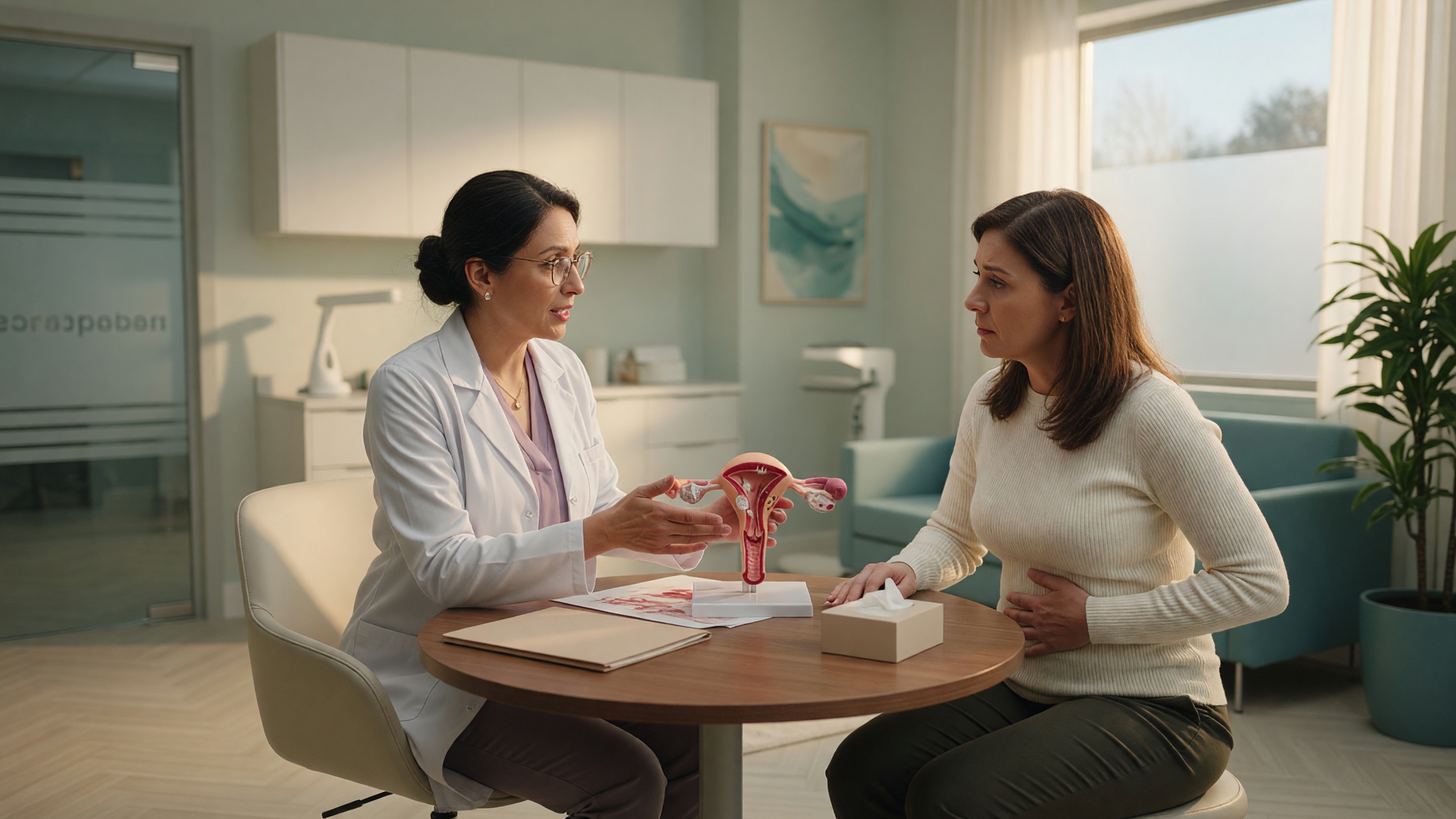
Common adenomyosis symptoms include heavy or prolonged periods, severe menstrual cramps, chronic pelvic pain, and pain during intercourse. Some women also notice bloating, fatigue from blood loss, or difficulty conceiving. Because these signs overlap with other gynaecological conditions, they are often dismissed as normal period problems. This guide explains seven warning signs you should not ignore, how doctors confirm the diagnosis, and which treatments can help. Recognising these symptoms early protects your health and quality of life, and you will also learn when to see a specialist at Lux Hospitals.
What Is Adenomyosis?
Adenomyosis is a non-cancerous condition where the tissue lining the uterus grows into the uterine muscle wall. This tissue still thickens and bleeds each cycle, causing swelling and pain.
It is most often diagnosed in women in their 40s, but younger women can be affected too. Known risk factors include:
Our guide on adenomyosis vs endometriosis explains how these two related conditions differ.
- Being in later reproductive years
- Previous childbirth
- Prior uterine surgery, such as caesarean
- Coexisting endometriosis or fibroids
1. Heavy or Prolonged Menstrual Bleeding
Heavy menstrual bleeding is one of the most common adenomyosis symptoms. The misplaced tissue enlarges the uterus and affects how it contracts.
You may notice:
Heavy flow is not something to simply endure. It belongs among the menstrual disorders that deserve proper medical evaluation.
- Soaking a pad or tampon hourly
- Passing large blood clots
- Periods lasting longer than seven days
- Needing double protection overnight
- Spotting between periods
2. Severe Menstrual Cramps (Dysmenorrhea)
Painful periods that worsen over time can signal adenomyosis. The trapped tissue swells and bleeds inside the muscle wall during each cycle.
Warning signs include:
Period pain that disrupts your daily life is never something to ignore. Effective relief is often possible once the cause is found.
- Cramps that worsen year after year
- Sharp or knife-like pelvic pain
- Pain not eased by painkillers
- Pain starting days before bleeding
- Missing work or school
Struggling with painful periods? Consult the gynaecology experts at Lux Hospitals today.
3. Chronic Pelvic Pain and Pressure
Some women feel discomfort even outside their periods. An enlarged uterus can press on nearby organs and nerves.
You may experience:
Chronic pelvic pain in women has many possible causes. A specialist evaluation helps pinpoint the true source.
- A constant dull pelvic ache
- Heaviness in the lower abdomen
- Lower back pain
- Pain spreading to the thighs
- Discomfort during bowel movements
4. Pain During Intercourse
Deep pain during sex, called dyspareunia, is another sign. It can occur when an inflamed, enlarged uterus is pressed during intimacy.
Common features include:
Many women hesitate to mention this symptom. Speaking openly with your gynaecologist is the first step towards relief.
- Deep pain rather than surface pain
- Aching that lingers after sex
- Pain worse around periods
- Avoiding intimacy due to discomfort
5. Bloating and an Enlarged Uterus
Adenomyosis can make the uterus noticeably larger and tender. This may cause visible swelling in the lower abdomen.
Look out for:
An enlarged uterus can also result from uterine fibroids. Imaging is essential to tell these conditions apart.
- A lower belly that looks swollen
- Bloating that worsens before periods
- Tenderness during pelvic examination
- Clothes feeling tight around the waist
- A constant feeling of fullness
Noticing unexplained bloating or swelling? Book an evaluation at Lux Hospitals.
6. Fatigue and Signs of Anemia
Months of heavy bleeding can steadily lower your iron levels. This may lead to iron-deficiency anemia.
Symptoms may include:
A simple blood test can check for anemia. Treating the cause of bleeding helps restore your energy.
- Constant tiredness or weakness
- Pale skin
- Breathlessness on mild exertion
- Dizziness or light-headedness
- Brittle nails or hair thinning
7. Difficulty Getting Pregnant
Research suggests adenomyosis may be linked with reduced fertility in some women. Experts are still studying exactly how it affects conception.
Possible concerns include:
If you are planning a family, discuss fertility-sparing options with your doctor early. Timely care can improve your chances.
- Trouble conceiving naturally
- Possible lower IVF success
- Higher risk of miscarriage
- Increased pregnancy complications
Planning a pregnancy with adenomyosis? Talk to a specialist at Lux Hospitals.
How Adenomyosis Is Diagnosed
Adenomyosis diagnosis starts with your medical history and a pelvic examination. Imaging then helps confirm the condition and rule out others.
Common tests include:
Your doctor may recommend a hysteroscopy procedure when the cause of abnormal bleeding is unclear.
- Transvaginal ultrasound
- Pelvic MRI for detailed imaging
- Blood tests for anemia
- Camera examination of the uterine lining
- Laparoscopy in selected cases
Treatment Options at Lux Hospitals
Adenomyosis treatment depends on your symptoms, age, and pregnancy plans. Many women find relief without major surgery.
Options may include:
Procedures like endometrial ablation or hysterectomy are considered only after a careful, shared discussion.
- Pain relievers — ease cramps and pain
- Hormonal IUD — reduces heavy bleeding
- Oral hormones — control cycles and pain
- Ablation — for selected superficial disease
- Hysterectomy — the only definitive cure
Why Choose Lux Hospitals?
At Lux Hospitals, women's health care combines expertise with compassion. Our team focuses on accurate diagnosis and personalised treatment.
You can expect:
We help you understand every option before you decide. Your comfort and goals guide every plan.
- Experienced gynaecologists and surgeons
- Advanced ultrasound and MRI imaging
- Fertility-sparing treatment approaches
- Minimally invasive surgical options
- Private, supportive consultations
Take control of your symptoms—schedule your consultation at Lux Hospitals today.
Conclusion
Adenomyosis symptoms such as heavy bleeding, worsening cramps, pelvic pain, and painful intercourse are often brushed aside as normal. They are not. Left untreated, they can drain your energy, strain relationships, and complicate fertility plans.
The good news is that effective treatments exist, from hormonal therapy to minimally invasive surgery. An accurate diagnosis is the first step towards choosing the right path for your body and your future. If you recognise any of these signs, take time to learn more about adenomyosis and book an evaluation. The gynaecology specialists at Lux Hospitals are here to listen, investigate, and guide you towards lasting relief and a better quality of life.