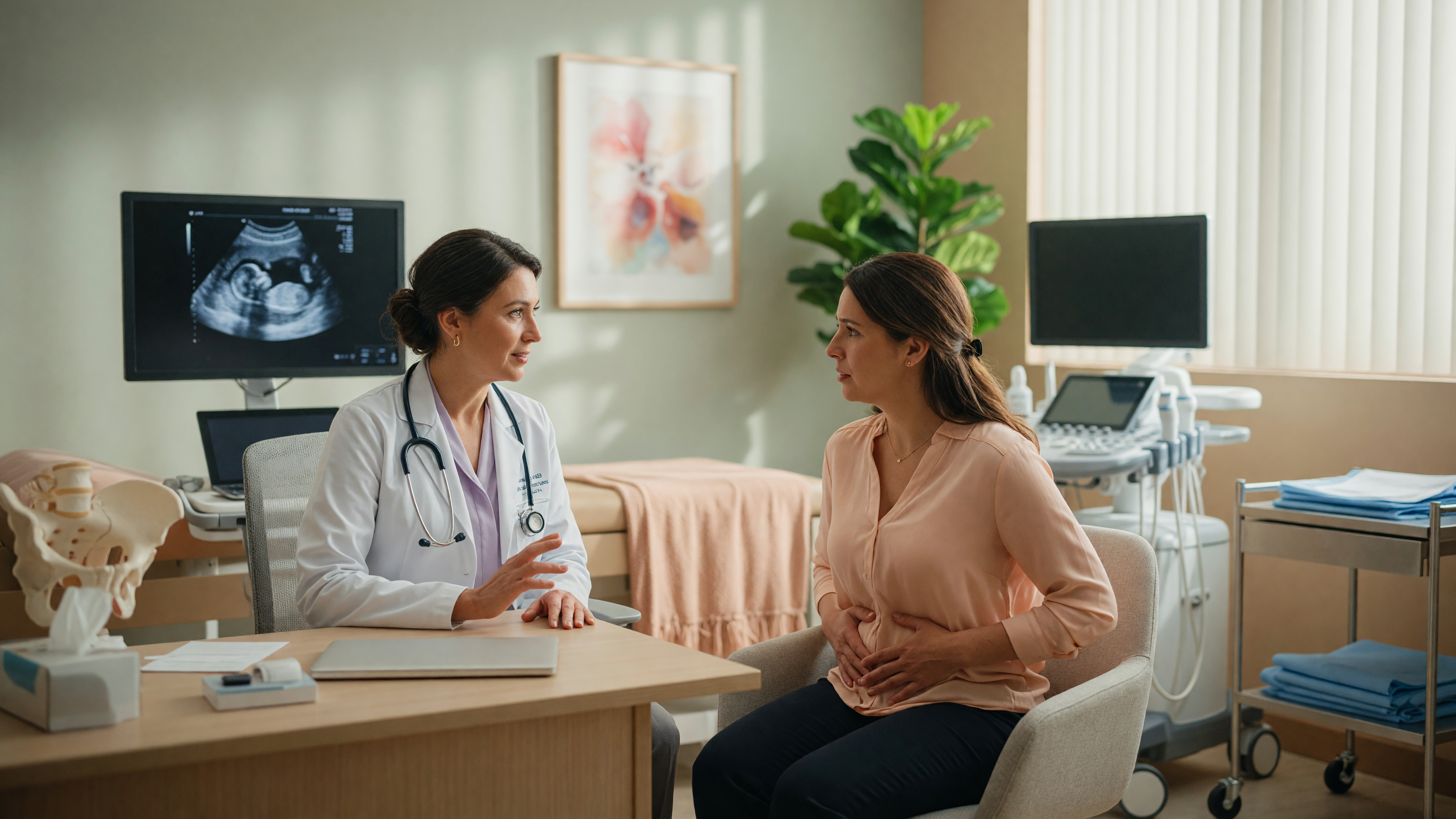
Pelvic pain in women is discomfort felt below the belly button and between the hips, and it can come from the reproductive organs, bladder, bowel, or muscles. Some causes are mild, like period cramps, while others, such as ovarian torsion or ectopic pregnancy, need urgent care. Because so many conditions share similar symptoms, getting the right diagnosis matters. In this guide, we explain the common causes of pelvic pain, how acute and chronic pain differ, and which warning signs need prompt attention. You will also learn how doctors diagnose pelvic pain and what treatment options are available.
What Is Pelvic Pain in Women?
Pelvic pain is any pain in the lowest part of the abdomen, between the belly button and the groin. It may feel dull, sharp, cramping, or constant.
The pelvis holds several organs, so pain can start in different places:
Because these organs sit close together, pinpointing the source often needs a medical evaluation.
- Uterus, ovaries and fallopian tubes
- Cervix and vagina
- Bladder and urethra
- Lower bowel and appendix
- Pelvic floor muscles and nerves
Acute vs Chronic Pelvic Pain
Doctors usually group pelvic pain by how long it lasts. This helps narrow down the likely causes.
Key differences include:
Chronic pelvic pain can affect sleep, work, and relationships. It deserves proper care, not silent endurance.
- Acute pain — sudden, often short-term
- Acute pain may signal an emergency
- Chronic pain — lasting six months or more
- Chronic pain may come and go
- Chronic pain may link to cycles
Common Gynecological Causes
Many causes of pelvic pain begin in the reproductive organs. Some are linked to the menstrual cycle and worsen around periods.
Common gynecological causes include:
These conditions are treatable, especially when found early by a gynecologist.
- Endometriosis — tissue growing outside the uterus
- Uterine fibroids — noncancerous muscle growths
- Ovarian cysts — fluid-filled sacs on ovaries
- Adenomyosis — lining growing into uterine wall
- Menstrual disorders causing severe cramps
Struggling with painful periods? Consult the gynecology experts at Lux Hospitals today.
Infections and Inflammatory Causes
Infections can inflame the pelvic organs and cause significant pain. Prompt treatment helps prevent long-term complications.
Infection-related causes include:
Untreated pelvic inflammatory disease can lead to scarring, chronic pain, and fertility problems. See a doctor early if you notice fever or unusual discharge.
- Pelvic inflammatory disease (PID)
- Sexually transmitted infections
- Urinary tract infections
- Tubo-ovarian abscess
- Vaginal or cervical infections
Pregnancy-Related Causes
Mild cramping can be normal in early pregnancy. However, some pregnancy-related pain needs urgent attention.
Possible causes include:
If you could be pregnant and have sharp one-sided pain or bleeding, seek emergency care right away.
- Ectopic pregnancy outside the uterus
- Miscarriage with cramping and bleeding
- Round ligament stretching
- Pain after pregnancy loss procedures
- Postpartum pelvic discomfort
Non-Gynecological Causes
Not all lower abdominal pain in women comes from the reproductive organs. The bladder, bowel, and muscles are frequent culprits too.
Other causes include:
A thorough check-up helps rule these out before focusing on gynecological causes.
- Appendicitis
- Irritable bowel syndrome or constipation
- Kidney or bladder stones
- Interstitial cystitis (painful bladder)
- Pelvic floor muscle tension
- Hernias or nerve irritation
Unsure what's causing your pain? Book an evaluation at Lux Hospitals.
Symptoms That Often Accompany Pelvic Pain
Pelvic pain rarely appears alone. Noting other symptoms helps your doctor find the cause faster.
You may notice:
Keeping a symptom diary, including your cycle dates, can be very useful at your appointment.
- Pelvic pain during periods
- Pain during or after sex
- Heavy or irregular bleeding
- Bloating or pressure in the pelvis
- Pain while urinating or passing stool
- Unusual vaginal discharge
When to Seek Help: Red Flag Signs
Some pelvic pain can wait for a routine visit, but some cannot. Conditions like ovarian torsion, where an ovary twists, need surgery within hours.
Seek emergency care if you have:
For milder but persistent pain, know when to see a gynecologist: if pain lasts weeks, disrupts daily life, or keeps returning.
- Sudden, severe pelvic pain
- Pain with fever or chills
- Fainting, dizziness or rapid heartbeat
- Pain with a positive pregnancy test
- Heavy bleeding soaking pads hourly
- Persistent nausea and vomiting
How Pelvic Pain Is Diagnosed
Pelvic pain diagnosis starts with a detailed history and physical exam. Your doctor will ask about your cycle, sexual health, and bowel and bladder habits.
Common tests include:
When imaging is unclear, a diagnostic laparoscopy lets surgeons look inside the pelvis through tiny cuts.
- Pelvic examination
- Pregnancy test
- Urine and blood tests
- Swabs for infections
- Pelvic ultrasound
- MRI or CT scan if needed
Get an accurate diagnosis—schedule a consultation with Lux Hospitals specialists.
Treatment Options at Lux Hospitals
Pelvic pain treatment depends on the underlying cause, your age, and your future pregnancy plans. Many women improve with non-surgical care.
Options may include:
Your specialist will discuss the benefits and risks of each option before creating your plan.
- Pain relief and anti-inflammatory medicines
- Antibiotics for infections
- Hormonal therapy for cycle-related pain
- Pelvic floor physiotherapy
- Minimally invasive laparoscopic surgery
- Hysteroscopy for problems inside the uterus
Why Choose Lux Hospitals?
Pelvic pain needs careful, compassionate care. At Lux Hospitals, our team focuses on finding the real cause, not just masking symptoms.
Patients choose us for:
We aim to help you return to comfortable, active living as quickly and safely as possible.
- Experienced gynecologists and surgeons
- Advanced imaging and diagnostics
- Minimally invasive surgical options
- Personalized, fertility-conscious care
- 24/7 emergency gynecology support
Take the first step toward relief—book your appointment at Lux Hospitals today.
Conclusion
Pelvic pain in women has many possible causes, from common period cramps to conditions like endometriosis, fibroids, infections, and pregnancy complications. While some pain is mild and short-lived, sudden severe pain, fever, fainting, or pain during pregnancy needs urgent medical attention.
Chronic pelvic pain should never be dismissed as something you must simply live with. Tracking your symptoms and seeing a specialist early can lead to a clear diagnosis and effective treatment. Most causes respond well to medicines, therapy, or minimally invasive surgery. If pelvic pain is affecting your daily life, consult the experienced gynecology team at Lux Hospitals for a thorough evaluation and a care plan tailored to you.