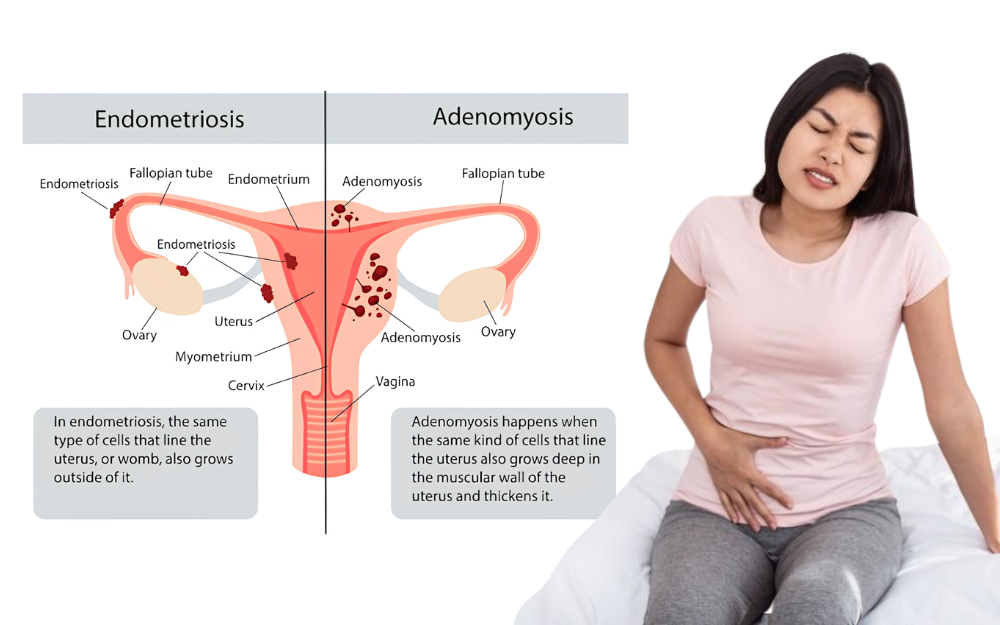
Adenomyosis vs endometriosis is a common comparison because both conditions can cause painful periods, pelvic pain and heavy menstrual bleeding. Although they share some symptoms, they are different gynecological conditions. The main difference is where the abnormal tissue is located.
In adenomyosis, tissue similar to the lining of the uterus grows into the muscular wall of the uterus. In endometriosis, tissue similar to the uterine lining grows outside the uterus. Understanding the difference between adenomyosis and endometriosis can help women recognize symptoms and seek appropriate medical evaluation.
What Is Adenomyosis?
Adenomyosis occurs when tissue similar to the endometrium grows into the muscular wall of the uterus. This can cause the uterus to become enlarged or tender in some women.
Common adenomyosis symptoms include:
- Heavy or prolonged periods
- Painful periods
- Pelvic pain
- Lower abdominal discomfort
- Pain during intercourse
- Pressure or heaviness in the pelvis
Some women may have mild symptoms, while others can experience significant pain or heavy menstrual bleeding.
What Is Endometriosis?
Endometriosis is a condition in which tissue similar to the lining of the uterus grows outside the uterus.
It can affect areas such as:
- Ovaries
- Fallopian tubes
- Pelvic lining
- Areas around the uterus
In some cases, endometriosis can affect other organs. The tissue can respond to hormonal changes during the menstrual cycle, which may contribute to inflammation, pain and scar tissue formation.
Common endometriosis symptoms include:
- Painful periods
- Chronic pelvic pain
- Pain during intercourse
- Pain during bowel movements
- Pain during urination, particularly around periods
- Bloating
- Fatigue
- Difficulty becoming pregnant
Adenomyosis vs Endometriosis: Key Difference
The most important difference in adenomyosis vs endometriosis is the location of the tissue.
- Location: In adenomyosis, tissue grows into the muscular wall of the uterus. In endometriosis, tissue grows outside the uterus.
- Areas affected: Adenomyosis primarily affects the uterus. Endometriosis can affect the ovaries, pelvic tissues and other areas.
- Typical symptoms: Adenomyosis is often associated with heavy periods and painful menstruation. Endometriosis is often associated with pelvic pain and painful periods.
- Physical findings: Adenomyosis may cause an enlarged or tender uterus. Endometriosis may cause adhesions and ovarian endometriomas.
- Diagnosis: Adenomyosis diagnosis often involves imaging. Endometriosis diagnosis may involve imaging and, in selected cases, surgery.
Although these conditions are different, a woman can have both adenomyosis and endometriosis at the same time.
Adenomyosis vs Endometriosis Symptoms
There is considerable overlap between adenomyosis vs endometriosis symptoms.
Both conditions can cause:
- Painful periods
- Pelvic pain
- Heavy menstrual bleeding
- Pain during intercourse
- Fertility difficulties
However, the pattern of symptoms can provide clues.
Symptoms More Commonly Associated With Adenomyosis
Adenomyosis is often associated with:
- Heavy menstrual bleeding
- Severe menstrual cramps
- Prolonged periods
- Pelvic pressure
- An enlarged or tender uterus
Symptoms More Commonly Associated With Endometriosis
Endometriosis may be associated with:
- Chronic pelvic pain
- Pain during intercourse
- Pain with bowel movements
- Pain during urination around menstruation
- Infertility
- Ovarian endometriomas
Symptoms alone cannot reliably distinguish the two conditions. Medical evaluation is important for an accurate diagnosis.
Adenomyosis Causes
The exact adenomyosis causes are not fully understood. Researchers have proposed several possible explanations, including changes involving the uterine lining and muscle tissue.
Adenomyosis is more commonly diagnosed in women during the reproductive years and may become more noticeable with age. A history of certain uterine procedures or previous pregnancy may also be associated with an increased likelihood of adenomyosis, although these factors do not mean that a woman will definitely develop the condition.
Endometriosis Causes
The exact endometriosis causes are also not completely understood.
Researchers believe that several factors may contribute to its development, including:
- Genetic factors
- Hormonal influences
- Immune system factors
- Other biological processes
Endometriosis can affect women differently, and the severity of symptoms does not always correspond to the extent of the disease.
How Is Adenomyosis Diagnosed?
An adenomyosis diagnosis may begin with a discussion about symptoms and menstrual history.
Your doctor may recommend:
- Pelvic examination
- Transvaginal ultrasound
- MRI in selected cases
Imaging can help identify changes in the uterine muscle and may support the diagnosis. Your doctor may also consider other causes of heavy bleeding or pelvic pain before confirming the diagnosis.
How Is Endometriosis Diagnosed?
An endometriosis diagnosis also begins with an assessment of symptoms and medical history.
Depending on the situation, your doctor may recommend:
- Pelvic examination
- Ultrasound
- MRI
- Other investigations
In selected cases, minimally invasive surgery may be considered to diagnose or treat endometriosis. Because endometriosis symptoms can overlap with several other conditions, a specialist evaluation can be helpful.
Adenomyosis Treatment
Adenomyosis treatment depends on the severity of symptoms, age, reproductive plans and overall health.
Pain Relief
Pain-relieving medicines may help manage menstrual cramps and pelvic discomfort.
Hormonal Treatment
Hormonal medicines may help reduce heavy menstrual bleeding and pain in some women.
Intrauterine Devices
Certain hormonal intrauterine devices may be considered to help manage heavy menstrual bleeding and related symptoms.
Surgery
Surgery may be considered for women with severe symptoms that do not respond adequately to other treatments. The appropriate approach depends on individual circumstances and whether future pregnancy is desired.
Endometriosis Treatment
Endometriosis treatment focuses on managing pain, reducing symptoms and addressing fertility concerns when relevant.
Treatment options may include:
- Pain-relieving medicines
- Hormonal treatment
- Minimally invasive surgery
- Fertility treatment
- Supportive therapies
The treatment approach depends on symptoms, disease location, fertility goals and previous treatment.
Adenomyosis vs Endometriosis Treatment
When comparing adenomyosis vs endometriosis treatment, it is important to understand that the treatment approach is not identical. Both conditions may be managed with pain-relieving medicines and hormonal treatment.
However, surgery can be different. For adenomyosis, treatment may focus on the uterus because the condition affects the uterine muscle. For endometriosis, surgery may involve removing visible endometriosis lesions or adhesions from affected areas.
The best treatment depends on the individual's symptoms, disease characteristics and reproductive goals.
Adenomyosis and Fertility
The relationship between adenomyosis and fertility is an area of ongoing research. Some women with adenomyosis may experience difficulty becoming pregnant or may have other reproductive concerns.
If you are trying to conceive, your gynecologist may consider your symptoms, age, fertility history and other reproductive factors when developing a treatment plan.
Endometriosis and Fertility
Endometriosis and fertility can also be connected. Endometriosis may contribute to difficulty becoming pregnant in some women.
Factors such as inflammation, adhesions and changes involving the reproductive organs may play a role. However, having endometriosis does not mean pregnancy is impossible. Fertility evaluation can help determine the most appropriate approach.
Can Adenomyosis and Endometriosis Occur Together?
Yes. Adenomyosis and endometriosis together can occur in the same person. When both conditions are present, symptoms may overlap and can sometimes be more difficult to identify based on symptoms alone.
A woman may experience:
- Severe menstrual pain
- Heavy periods
- Chronic pelvic pain
- Pain during intercourse
- Fertility difficulties
A detailed medical history and appropriate imaging can help doctors evaluate both conditions.
Which Is More Serious: Adenomyosis or Endometriosis?
There is no simple answer to which condition is more serious. Both adenomyosis and endometriosis can significantly affect quality of life.
The impact depends on:
- Severity of symptoms
- Location and extent of disease
- Fertility concerns
- Response to treatment
- Individual health
Some women have mild disease with few symptoms, while others may experience significant pain or fertility problems.
When Should You See a Gynecologist?
Consider consulting a gynecologist if you experience:
- Severe period pain
- Very heavy menstrual bleeding
- Periods lasting longer than usual
- Persistent pelvic pain
- Pain during intercourse
- Pain during bowel movements
- Pain during urination around your periods
- Difficulty becoming pregnant
Persistent or severe symptoms should not simply be considered a normal part of menstruation. A medical evaluation can help determine whether adenomyosis, endometriosis or another condition may be responsible.
Conclusion
Understanding adenomyosis vs endometriosis is important because both conditions can cause painful periods, pelvic pain, heavy bleeding and fertility concerns. The key difference is the location of the tissue. Adenomyosis affects the muscular wall of the uterus, while endometriosis involves tissue growing outside the uterus. Because symptoms can overlap, it is not always possible to distinguish the conditions based on symptoms alone. If you experience persistent pelvic pain, heavy periods, severe menstrual cramps or fertility difficulties, consult a qualified gynecologist for appropriate evaluation.
Medical Disclaimer: This article is intended for general educational purposes and should not replace professional medical advice, diagnosis or treatment.