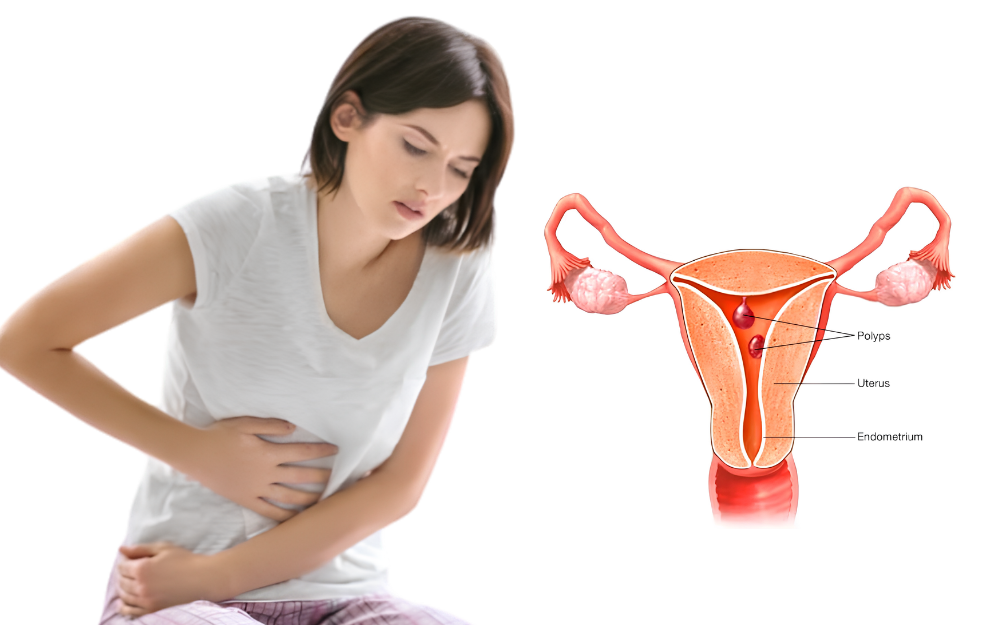
Uterine polyps are growths that develop from the inner lining of the uterus, known as the endometrium. They are also commonly called endometrial polyps. Most uterine polyps are non-cancerous. However, they can sometimes cause abnormal menstrual bleeding, spotting or fertility problems. Some polyps cause no symptoms and may be discovered during a routine gynecological examination or investigation for another concern. Understanding the uterine polyp symptoms, causes and treatment options can help women know when to consult a gynecologist.
What Are Uterine Polyps?
Uterine polyps are overgrowths of tissue from the lining of the uterus.
They can vary in:
- Size
- Number
- Shape
- Location
Some are small and may not cause any noticeable symptoms. Others can become larger and contribute to abnormal bleeding or other gynecological problems. Endometrial polyps can occur before or after menopause, although the likelihood and significance may vary with age and individual health factors.
Having a uterine polyp does not automatically mean that it is cancerous. Most are benign, but your doctor may recommend evaluation based on your age, symptoms and other risk factors.
What Causes Uterine Polyps?
The exact uterine polyp causes are not always clear. Hormonal factors appear to play an important role. The endometrium responds to estrogen and other hormonal changes throughout the menstrual cycle.
Factors that may be associated with an increased likelihood of developing polyps include:
- Hormonal changes
- Increasing age
- Perimenopause or menopause
- Obesity
- Certain hormonal medications
- Some medical conditions
Not every woman with these factors will develop a polyp. A gynecologist can assess your individual history and determine whether further evaluation is needed.
Common Uterine Polyp Symptoms
Some women with uterine polyps have no symptoms.
When symptoms occur, they may include:
- Irregular menstrual bleeding
- Heavy periods
- Bleeding between periods
- Spotting
- Bleeding after menopause
- Prolonged menstrual bleeding
- Difficulty becoming pregnant
Abnormal Uterine Bleeding
Abnormal bleeding is one of the most common uterine polyp symptoms.
You may notice:
- Periods that are heavier than usual
- Bleeding between periods
- Irregular menstrual cycles
- Spotting
- Unexpected bleeding after menopause
Abnormal bleeding can have many possible causes, so it should not automatically be attributed to polyps. If unusual bleeding continues or repeatedly occurs, consult a gynecologist for an appropriate evaluation.
Uterine Polyps and Fertility
The relationship between uterine polyps and fertility is an important concern for women who are trying to conceive. Some polyps may interfere with implantation or contribute to fertility problems.
However, having an endometrial polyp does not necessarily mean that you will have difficulty becoming pregnant. If you are experiencing infertility or repeated pregnancy difficulties, your doctor may evaluate the uterus and other possible causes.
Depending on the findings, uterine polyp removal may be considered. Your fertility goals should be discussed with your gynecologist before deciding on treatment.
How Are Uterine Polyps Diagnosed?
A doctor may use different tests to identify uterine polyps.
Pelvic Examination
A pelvic examination may help identify other gynecological conditions, although small uterine polyps may not be detected through a routine examination.
Transvaginal Ultrasound
A transvaginal ultrasound uses sound waves to create images of the uterus and reproductive organs. It may help identify abnormalities within the uterine cavity.
Saline Infusion Sonography
This examination involves placing a small amount of sterile fluid inside the uterus while performing an ultrasound. The fluid can help provide a clearer view of the uterine cavity.
Hysteroscopy
Hysteroscopy allows a doctor to examine the inside of the uterus using a thin camera. It can also be used to remove certain polyps during the same procedure.
Endometrial Biopsy
An endometrial biopsy may be recommended in selected cases to examine tissue from the uterine lining. The appropriate test depends on your symptoms, age and medical history.
Uterine Polyp Treatment Options
Uterine polyp treatment depends on factors such as:
- Size of the polyp
- Number of polyps
- Symptoms
- Age
- Menopausal status
- Fertility plans
- Appearance of the polyp
Not every polyp requires immediate treatment.
Observation
Small polyps that are not causing symptoms may sometimes be monitored. Some polyps can disappear naturally, particularly in certain premenopausal women. Your doctor may recommend follow-up based on your individual situation.
Medication
Hormonal medicines may sometimes help manage abnormal bleeding. However, medication may not permanently remove an existing polyp. Your doctor will determine whether medication is appropriate based on the underlying cause of your symptoms.
Uterine Polyp Removal
When treatment is needed, uterine polyp removal is commonly performed using hysteroscopy. During the procedure, a thin camera is inserted through the vagina and cervix into the uterus. The doctor can identify and remove the polyp without making an abdominal incision. The removed tissue may be sent for laboratory examination.
Uterine Polyp Surgery
Uterine polyp surgery is generally considered when a polyp is causing symptoms, persists over time or requires tissue evaluation. Hysteroscopic removal is commonly used because it allows the doctor to directly see the uterine cavity and remove the abnormal tissue. The exact procedure depends on the size, location and characteristics of the polyp.
When Should You See a Gynecologist?
Consider consulting a gynecologist if you experience:
- Heavy or prolonged periods
- Bleeding between periods
- Irregular menstrual bleeding
- Bleeding after menopause
- Repeated spotting
- Difficulty becoming pregnant
- Unexplained changes in your menstrual cycle
You should not ignore persistent abnormal bleeding. A gynecological evaluation can help determine whether uterine polyps or another condition may be responsible.
Conclusion
Uterine polyps are common growths that develop from the lining of the uterus. Many are harmless and may not cause symptoms. However, abnormal bleeding, heavy periods, spotting or fertility difficulties should be evaluated by a gynecologist. Uterine polyp treatment depends on the size, location, symptoms and individual health factors. Some polyps can be monitored, while others may require uterine polyp removal, often through hysteroscopy. If you experience persistent abnormal bleeding or have concerns about fertility, consult a qualified gynecologist for appropriate evaluation and personalized treatment.