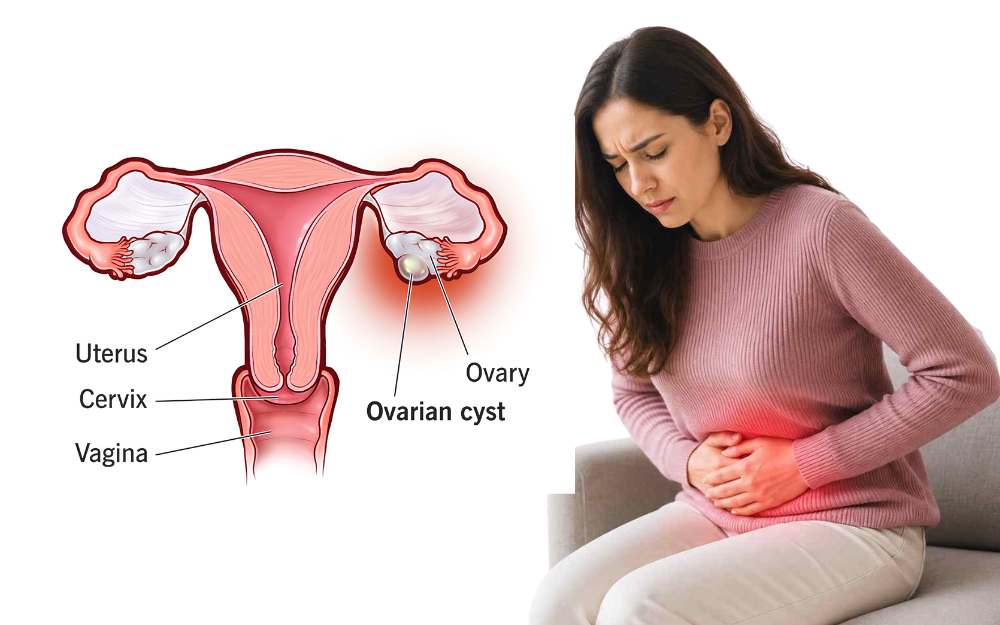
An ovarian cyst is a fluid-filled sac that develops in or on an ovary. Ovarian cysts are common, and many are harmless and disappear without treatment. However, some cysts can become large, cause persistent symptoms, rupture or lead to complications. Knowing the common ovarian cyst symptoms and understanding when medical attention is needed can help women seek timely care. This guide explains the common types, causes, symptoms, diagnosis and treatment options for ovarian cysts.
What Is an Ovarian Cyst?
An ovarian cyst is a sac that forms in or on an ovary. Cysts can vary in size and may occur at different stages of a woman's reproductive life. Many ovarian cysts develop as part of the normal menstrual cycle. These are often called functional cysts and may disappear naturally within a few weeks or months. Other cysts may develop for different reasons and may require monitoring or treatment.
An ovarian cyst does not automatically mean cancer. Most ovarian cysts are benign, but the appropriate evaluation depends on factors such as age, symptoms, cyst size and appearance on imaging.
What Causes Ovarian Cysts?
There are several possible ovarian cyst causes.
Common causes include:
- Normal changes during the menstrual cycle
- Hormonal changes
- Endometriosis
- Polycystic ovary syndrome (PCOS)
- Abnormal cell growth
- Certain medications or fertility treatments
Functional cysts are among the most common types and often resolve without specific treatment. However, if a cyst persists, grows or causes symptoms, your doctor may recommend further evaluation.
Types of Ovarian Cysts
There are different ovarian cyst types, and their appearance and treatment can vary.
Functional Cysts
Functional cysts develop during the normal menstrual cycle. They are generally harmless and often disappear on their own.
Dermoid Cysts
Dermoid cysts can contain different types of tissue. They are usually benign but may become large or cause complications.
Endometriomas
Endometriomas are associated with endometriosis. They can cause pelvic pain and may sometimes affect fertility.
Cystadenomas
Cystadenomas develop from the surface of the ovary. Some can become large and may require monitoring or treatment.
Polycystic Ovaries
Polycystic ovaries can be associated with PCOS. However, having multiple small follicles on the ovaries does not by itself mean that a woman has PCOS.
What Are the Symptoms of an Ovarian Cyst?
Many women with an ovarian cyst have no symptoms.
When symptoms occur, they may include:
- Lower abdominal or pelvic pain
- Abdominal fullness or pressure
- Bloating
- Pain during intercourse
- Changes in menstrual periods
- Frequent urination due to pressure on the bladder
- Difficulty emptying the bowel
- Feeling full quickly
The symptoms can vary depending on the size, type and location of the cyst.
Ovarian Cyst Pain
Ovarian cyst pain may feel like a dull ache, pressure or sudden sharp pain in the lower abdomen. Pain may occur on one side of the pelvis and can sometimes become more noticeable during physical activity or intercourse.
Persistent or severe pelvic pain should be medically evaluated because several conditions can cause similar symptoms.
When Should You Worry About an Ovarian Cyst?
Most ovarian cysts are not dangerous. However, certain symptoms require prompt medical attention.
You should seek medical care if you experience:
- Sudden, severe pelvic or abdominal pain
- Severe pain accompanied by vomiting
- Fainting or significant dizziness
- Fever with pelvic pain
- Rapidly worsening abdominal symptoms
- Persistent or worsening pelvic pain
These symptoms may sometimes occur with complications such as ovarian torsion or cyst rupture. If you experience sudden severe abdominal or pelvic pain, seek urgent medical attention rather than waiting for the symptoms to settle.
What Happens If an Ovarian Cyst Ruptures?
An ovarian cyst rupture occurs when the wall of a cyst breaks open. Some ruptured cysts cause mild symptoms and resolve without major complications.
Others can cause:
- Sudden pelvic pain
- Abdominal discomfort
- Bloating
- Dizziness or weakness
The severity depends on the type of cyst and whether there is significant internal bleeding or another complication. Severe pain, fainting, dizziness or other concerning symptoms require urgent medical evaluation.
Can a Large Ovarian Cyst Be Dangerous?
A large ovarian cyst does not necessarily mean that the cyst is cancerous or dangerous. However, larger cysts may have a greater chance of causing pressure symptoms or complications.
A large cyst may cause:
- Pelvic pressure
- Abdominal fullness
- Bloating
- Pain
- Urinary pressure
- Bowel discomfort
Doctors may recommend monitoring, repeat imaging or treatment depending on the cyst's appearance, size, symptoms and other individual factors.
How Is an Ovarian Cyst Diagnosed?
Ovarian cyst diagnosis usually begins with a medical history and pelvic examination.
Your doctor may recommend an ultrasound to evaluate:
- Cyst size
- Location
- Shape
- Internal appearance
- Whether the cyst is fluid-filled or contains solid components
In some situations, additional imaging or blood tests may be recommended. Your doctor will consider your age, symptoms, menstrual history and imaging findings when determining the next step.
Ovarian Cyst Treatment
Ovarian cyst treatment depends on several factors.
These may include:
- Your age
- Symptoms
- Cyst size
- Cyst appearance
- Whether the cyst is changing
- Menopausal status
- Risk factors
- Fertility considerations
Watchful Waiting
If the cyst appears benign and does not cause significant symptoms, your doctor may recommend observation. A follow-up ultrasound may be performed to check whether the cyst has disappeared or changed.
Medication
Medication may sometimes be used to manage symptoms or address underlying hormonal conditions. However, medication does not necessarily make every type of ovarian cyst disappear.
Surgery
Ovarian cyst surgery may be considered when a cyst:
- Is large
- Persists over time
- Causes significant symptoms
- Has concerning features
- Complicates the ovary
- Causes complications such as torsion
The type of surgery depends on the cyst and individual circumstances. Whenever possible, doctors consider preserving healthy ovarian tissue, particularly in women who wish to have children.
When Does an Ovarian Cyst Need Surgery?
There is no single size that automatically means an ovarian cyst needs surgery. The decision depends on more than size alone.
Surgery may be recommended when the cyst:
- Continues to grow
- Does not resolve over time
- Causes significant or persistent pain
- Has a complex or concerning appearance
- Causes ovarian torsion
- Has other features that require further assessment
Your gynecologist will review your ultrasound findings and medical history before recommending surgery.
Ovarian Cyst and Fertility
The relationship between an ovarian cyst and fertility depends on the type of cyst and the underlying condition. Many common functional cysts do not affect fertility.
However, conditions such as endometriosis or PCOS may be associated with fertility challenges. Some ovarian cyst surgeries can also affect ovarian tissue. For this reason, women who are planning pregnancy should discuss their fertility goals with their gynecologist before undergoing treatment.
When Should You See a Gynecologist?
Make an appointment with a gynecologist if you have:
- Persistent pelvic pain
- Repeated abdominal bloating
- Changes in your menstrual cycle
- Pain during intercourse
- A known cyst that is increasing in size
- A cyst that does not disappear on follow-up
- Concerns about fertility
Seek urgent medical attention for sudden severe pelvic or abdominal pain, particularly when accompanied by vomiting, dizziness, fainting or fever.
Conclusion
An ovarian cyst is common and is often harmless, particularly when it develops as part of the normal menstrual cycle. However, persistent symptoms, a growing cyst, a complex cyst or sudden severe pain should not be ignored. Understanding ovarian cyst symptoms, knowing when an ovarian cyst may need treatment and attending recommended follow-up appointments can help identify complications early. If you have persistent pelvic pain, a known large ovarian cyst or symptoms that concern you, consult a qualified gynecologist for an appropriate evaluation and personalized treatment plan.